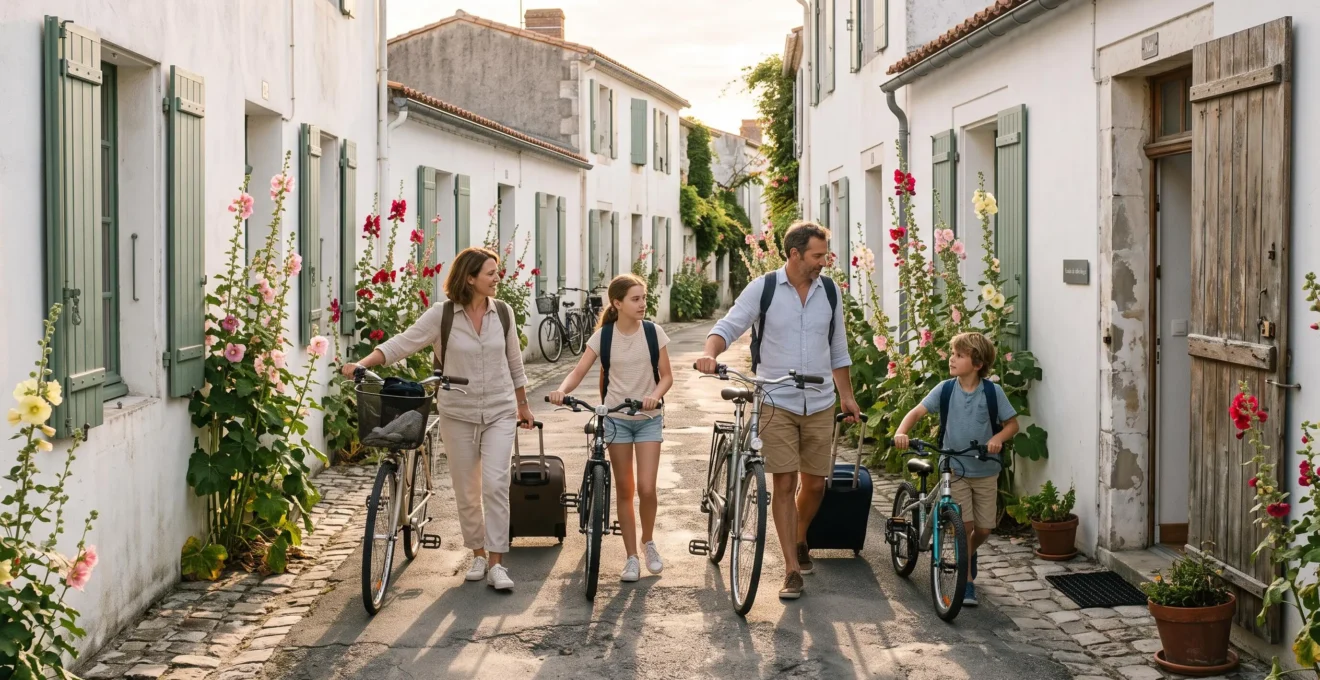
Direct answer: If you want the simplest, most flexible family base on Île de Ré, start by choosing a village where beach access, shops, and bike paths are easy with kids—then pick the accommodation type that matches your children’s ages and your rhythm. Families who like “walkable + convenient” often feel comfortable in a central, lively village; families who want “quieter + nature” tend to prefer smaller villages farther from the bridge.
This guide helps you decide where should families stay on Île de Ré without relying on vague “best village” claims. You’ll match your family profile (kids’ ages, beach needs, noise tolerance, logistics) to a village and a lodging style—then you’ll know what to book early and what to double-check before you pay.
A practical way to choose your family base
- Pick your non-negotiables first: beach type, walkability, and bike access.
- Match village vibe to your kids: lively port vs quieter residential vs nature-forward west.
- In summer, availability is the constraint: decide earlier, then compare options within the same area.
- Choose lodging by daily routine: kitchen + space (rental/gîte), hosted comfort (maison d’hôtes), or kid facilities (camping).
- Confirm family essentials in writing: beds, safety, storage, and secure bike parking.
What Should Families Look for When Choosing a Base on Île de Ré?
You’ll make a better choice (and waste less time comparing listings) if you decide on three practical criteria before you look at photos: how you’ll move around, what “easy beach time” means for your kids, and how seasonal demand will affect your options.
How close do you want to be to bikes, beaches, and shops?
On Île de Ré, day-to-day comfort for families often comes down to distance, not “prestige.” If you can reach a beach, a bakery, and basic groceries without planning a car trip each time, you’ll feel the island is much simpler with children.
- Bike paths nearby: useful if you plan to rely on cycling (including child seats or trailers).
- Beach access that fits your kids: think stroller-friendly routes, calmer spots, and how much gear you carry.
- Shops within an easy loop: so snacks, diapers, and forgotten essentials don’t become a daily mission.
What do your children actually need at this age?
A “family-friendly” place can mean very different things depending on whether you’re traveling with toddlers, school-age kids, or teens. The more you anchor your search in real constraints, the less you’ll overpay for features you won’t use.
- Babies/toddlers: safe stairs, a door or gate between living space and street, room for naps, and space to park a stroller.
- Young kids: quick beach access, a place to rinse sand, and a layout that lets parents supervise easily.
- Teens: independence (bike access, cafés/activities nearby), plus enough space to avoid “everyone in one room” fatigue.
If you want a trustworthy baseline when you compare providers, you can also check whether an accommodation or service is part of the réseau labellisé Famille Plus sur l’île, which the local tourist office describes as covering stays, restaurants, activities, and bike rentals committed to family-oriented standards.
How will your travel season change availability?
Your timing shapes what’s realistically available. In peak summer weeks, the main pressure point is often choice: by the time you start browsing, the best match for your family (space, location, and layout) may already be booked. Outside peak periods, you can usually afford to be pickier about village feel and exact location.
Cas pratique
A hypothetical family with a 2-year-old and a 6-year-old decides their “must-haves” are: a short, stroller-friendly route to a sandy beach; groceries within walking or easy cycling distance; and a calm street for early bedtimes. Instead of comparing the whole island, they focus on quieter areas where those three needs are easiest to meet, then filter listings by safety features and storage for a stroller and beach gear.
How do you balance budget against location?
Without using unverified price claims, you can still make a clear budget trade-off: the more central and walkable the base, the fewer paid add-ons you may need (extra driving, paid parking stress, last-minute gear purchases). If your budget is tight, prioritize a place that reduces daily friction—even if the décor is simpler—because convenience is what you “use” every day with kids.
Which Village of Île de Ré Suits Your Family Best?
The island is made up of multiple communes (villages), and your best fit depends on the family experience you want: port energy and easy logistics, a quieter beach routine, or a nature-and-outdoors vibe. Use the grid below as a starting point, then validate with your exact accommodation location and how you plan to get around.
Before the grid, one reality check: regulations can affect the short-term rental market. For example, the Communauté de Communes de l’Île de Ré notes a capped number of authorized “meublés de tourisme” and limits per owner in its règlement des meublés de tourisme sur l’Île de Ré. For you, the takeaway is simple: in high-demand periods, the right place can be scarce, so narrowing down the village early is practical.
Here’s a non-ranking grid to match village feel to common family profiles.
| Family priority | A village type that often fits | Why it can work |
|---|---|---|
| Walkable days with cafés, harbor strolls, and easy errands | More central, port-oriented villages (example: Saint-Martin-de-Ré) | Port atmosphere, lots happening at walking distance, practical as a “base” for exploring |
| Quieter beach routine and calmer evenings | More residential villages on the south side (example: Sainte-Marie-de-Ré) | Often feels less “busy,” which can help with naps and early bedtimes |
| Nature, big outdoor days, salt marsh landscapes | Western part of the island (examples: Ars-en-Ré and nearby areas) | A strong outdoors feel; great if your family is happiest cycling and being outside |
| Minimize arrival/departure hassle from the bridge | Villages closer to the bridge side | Shorter transfer once you’re on the island; helpful with tired kids and luggage |
Saint-Martin-de-Ré: who is it a good fit for?
Saint-Martin-de-Ré often fits families who want energy and convenience: a port to stroll, places to eat, and an easy “base-camp” feel. If your kids like watching boats and you like having options without planning, this style of village can reduce friction.
The trade-off is that livelier areas can feel busier in peak periods. If your children are very noise-sensitive or you value very early nights, you’ll want to pay extra attention to the exact street and whether bedrooms face quiet courtyards.
Sainte-Marie-de-Ré: who is it a good fit for?
Sainte-Marie-de-Ré tends to suit families who picture a calmer southern village rhythm and want to anchor days around the beach and simple routines. It can be a comfortable compromise if you want access to services without feeling like you’re in the busiest hub.
To avoid surprises, confirm how far your rental is from the beach access you’ll actually use (and whether the route works with a stroller or tired legs at the end of the day).
Ars-en-Ré and the west: who is it a good fit for?
Ars-en-Ré and the western side often fit families who prioritize nature and cycling over being “in the middle of everything.” If your best days are long rides, marsh views, and outdoor time, this side can feel like the holiday itself—not just the place you sleep.
The main limit is logistics: if you’re arriving late, doing lots of back-and-forth trips, or relying heavily on quick supermarket runs, you’ll want to plan a bit more.
Saint-Martin-de-Ré vs Ars-en-Ré: what changes for the same family?
For the same hypothetical family (two kids, one stroller, beach every day), Saint-Martin-de-Ré can make errands and evenings easier—you have more within walking distance. Ars-en-Ré can make the holiday feel more outdoors-led, with days organized around bike routes and nature time. Neither is “better” on its own; the right pick is the one that matches how you want your days to flow.
How to Plan the Trip Around Seasons and Logistics
Once you’ve chosen a village “type,” the next decision is practical: when to book and how to move around with children so your plan stays realistic. This is where families often lose time—because the island looks small on a map, but your day still has naps, snacks, and tired legs.
When should families book to handle high-season demand?
If you’re traveling in high season, the strongest lever you control is booking early. Not because you’ll magically “find deals,” but because you’ll have more choice: safer layouts, better bike storage, a calmer street, or a place that’s genuinely walkable for kids.
High-season reality for families: waiting longer often forces you to compromise on location or layout (for example, “nice house” but far from the beach, or “good village” but cramped for naps).
How do families get around Île de Ré with children?
Most family planning on Île de Ré revolves around bikes when possible, with a car used more as a backup for arrivals, big grocery runs, or rainy-day flexibility. For families, the key isn’t the mode—it’s whether your accommodation makes that mode easy: safe bike parking, quick access to paths, and a route you can repeat without stress.
If biking isn’t realistic for your family (very young kids, mobility needs, or simply preference), look for a base where you can still do the essentials on foot and keep car trips occasional rather than constant.
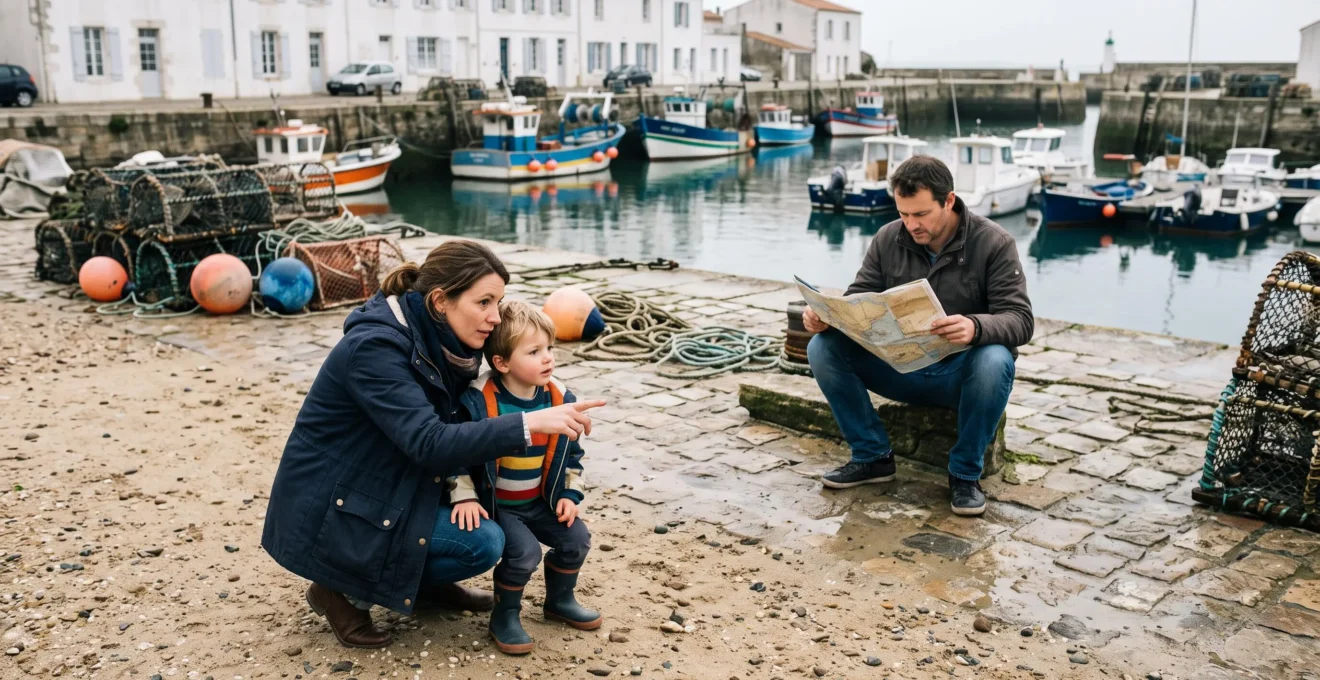
What should families plan for on arrival and day-to-day timing?
With kids, what matters is reducing “transition friction”: bridge-to-accommodation, accommodation-to-beach, and end-of-day returns. Choose check-in times you can actually meet, plan your first grocery stop, and don’t overpack the first afternoon.
A simple pattern works well: one main activity per day (beach, market, bike ride), plus a flexible backup (playground, easy harbor walk). That structure keeps you from spending the holiday negotiating logistics.
Scenario: booking early vs booking late for July
Imagine you’re booking for July. If you book early, you can filter hard for what matters to families (ground-floor for stroller, quiet bedroom, secure bike storage, short route to the beach). If you book late, you’ll often choose between compromises: the right village but the wrong layout, or the right space but daily driving. The lesson is not “panic”—it’s “decide your base first, then book once you find a fit.”
Which Family-Friendly Accommodation Type to Pick?
After you choose the village, pick the accommodation type that supports your daily routine. On Île de Ré, families most commonly compare self-catering rentals (often called gîtes or holiday rentals), maisons d’hôtes, and camping. Each can work—the best choice depends on age, stay length, and how much structure you want.
When does a gîte or holiday rental make the most sense?
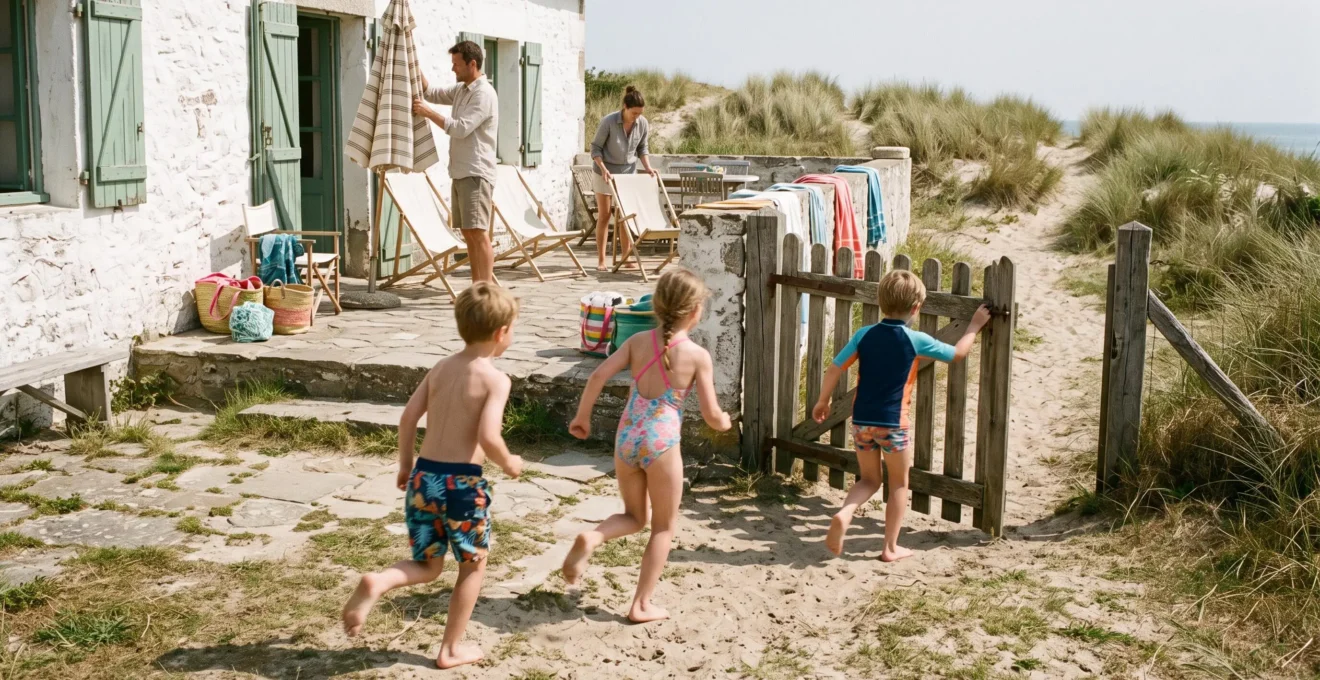
A self-catering rental usually fits families who want space, a kitchen, and flexibility. You control breakfasts, naps, and laundry, and you can keep beach days simple. It can also help when your budget depends on cooking some meals at home.
When is a maison d’hôtes a good idea for families?
A maison d’hôtes can work well if your family values a hosted experience and you don’t need a full kitchen. It often suits shorter stays, older kids, or parents who want mornings to feel “handled.”
The limit is predictability for very young children: confirm room configuration, quiet hours, and whether there’s space for a stroller and wet beach gear—details that matter more than charm when you’re traveling with toddlers.
When does camping work best on Île de Ré with kids?
Camping can be a strong fit for families who want on-site kid energy: play areas, a social atmosphere, and easy “make friends” dynamics. It often works especially well with school-age kids who enjoy structured activity and quick access to other children.
The trade-off is comfort and noise control. If naps and early bedtimes are critical, ask where the unit is located inside the campsite and what evenings typically look like in the period you’re traveling.
Decision example: gîte vs campsite with toddlers
If you’re traveling with toddlers, a rental (gîte/house) can make naps, meals, and safety easier—especially if you get a ground-floor layout or a secure outdoor area. A campsite can still work if you pick a quieter spot and you’re comfortable with shared-family rhythms. In both cases, your decision is stronger if you match it to your daily routine, not the listing photos.
If you want extra structure for organizing a trip with kids (beyond accommodation), this internal resource on family travel planning can help you build a simple, repeatable system.
Booking Checklist for a Family Stay on Île de Ré
Use this checklist to move from “interesting listings” to a booking you feel confident about—especially if you’re planning high season, when the right layout in the right village can disappear quickly.
- Lock your family profile first
Write down your children’s ages, your non-negotiables (quiet nights, beach type, walkability), and your “nice-to-haves.” This keeps you from chasing pretty photos.
- Pick a village style, then a micro-location
Decide whether you want a central/port base, a quieter southern rhythm, or a west-island nature focus. Then confirm the exact access to beach, shops, and bike paths.
- Book as early as you can for peak summer
In high season, early booking mainly protects you from being forced into a poor layout or inconvenient location.
- Verify kid-specific features before paying
Ask (and keep a written record) about beds and room setup, stair or pool safety, storage for strollers, and secure bike parking.
- Plan transport and bikes after the booking
Once your base is set, decide whether you’ll rely on bikes, a car, or a mix—and map your “first day” so you arrive calmly.

Where should we stay on Île de Ré with young children?
Which Île de Ré village is best for a family on a tight budget?
Where should a family stay on Île de Ré outside high season?
Is it better to rent a house or go to a campsite?
If you’re still deciding where should families stay on Île de Ré, make one final check: does your chosen village and address support the way your family actually moves (walk, bike, stroller, car)? If the answer is yes, you’re ready to book—and then build the rest of the trip around that stable base.